China Top Optical Case Manufacturers for Global Buyers?
China Top Optical Case Manufacturers for Global Buyers? This question matters as eyewear demand expands across retail, healthcare, and online channels. The World Health Organization reports that at least 2.2 billion people live with vision impairment worldwide. That creates continuing demand for glasses, sunglasses, and protective storage.
The Grand View Research Eyewear Market Size, Share & Trends Analysis Report, 2024–2030, identifies ongoing growth in global eyewear consumption. Its findings indirectly support a larger need for dependable Optical Case supply. Cases protect lenses during shipping, retail display, travel, and daily use. A scratched lens can damage customer trust quickly. Small details matter. Strong hinges, clean stitching, soft microfiber lining, and accurate logo placement often separate reliable factories from weak suppliers.
This guide evaluates Chinese manufacturers through practical buyer criteria. These include material consistency, mold capability, quality inspection, export experience, customization, minimum order quantities, and production transparency. Suppliers may offer EVA, PU leather, plastic, aluminum, or recycled fabrics. Each option has different durability, cost, and environmental considerations. Buyers should request samples before approving bulk production. They should also verify factory audits, testing records, packaging methods, and corrective-action procedures. Certifications help, but they do not replace physical inspection. That point is sometimes overlooked.
China has a mature accessories supply chain, yet “top” is not an absolute label. Performance depends on product type, order volume, target market, and required finish. Some supplier information may change. Therefore, this overview encourages direct verification, realistic specifications, and documented communication before signing a purchase agreement.
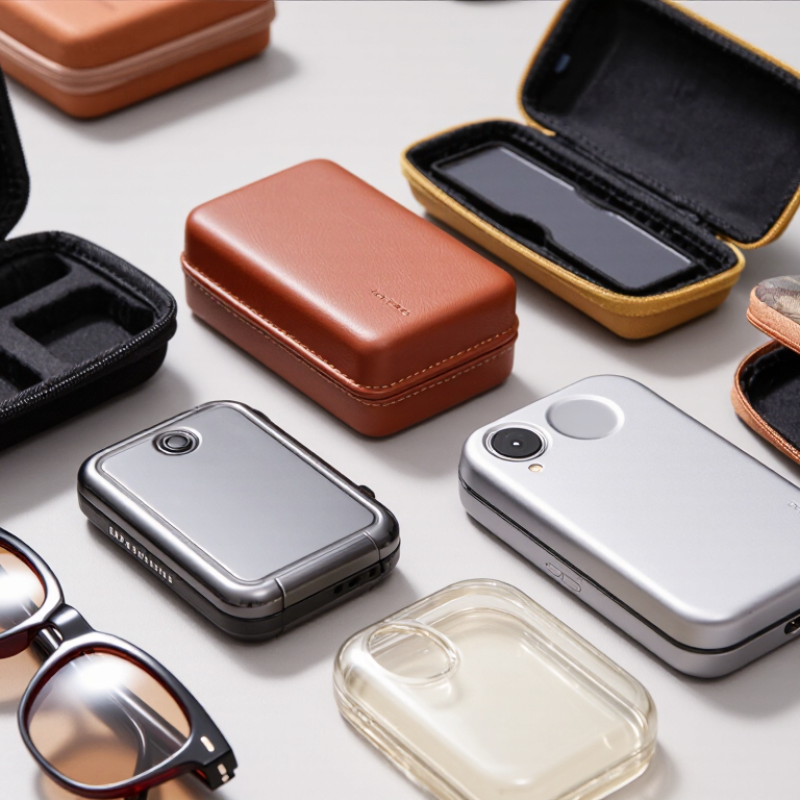
Optical Case Types and Protection Ratings: IP54–IP68 under IEC 60529
Global optical case buyers should treat IP ratings as engineering evidence, not marketing decoration. IEC 60529 defines the two digits: dust protection comes first, water protection second. IP54 resists limited dust and splashing water. IP65 handles water jets. IP67 is dust-tight and supports temporary immersion, commonly tested at one metre for 30 minutes. IP68 allows deeper or longer immersion, but the manufacturer must state the exact conditions.
The choice depends on location. A transport case for indoor fiber tools may need IP54, while a roadside splice enclosure faces rain, dust, and cleaning jets. Coastal installations deserve extra attention. Salt exposure can damage hinges, seals, and metal fasteners even when the enclosure passes a short laboratory test. It is easy to miss this.
The International Telecommunication Union reported 5.4 billion internet users in its Facts and Figures 2023, increasing pressure on network expansion and maintenance. That growth makes durable optical protection commercially important. Supplier audits should request IEC 60529 test reports, gasket material data, impact ratings, and cable-entry details. IP68 alone is incomplete. In practice, a poorly fitted gland can reduce real protection below the printed rating. Buyers should also check aging tests, temperature cycling, and field service records before selecting an optical case manufacturer.
Testing and Customization: IEC 60068 Shock, Vibration, and Thermal Standards
China Top Optical Case Manufacturers for Global Buyers
Testing should guide customization, not merely decorate a specification sheet. IEC 60068-2-27 evaluates mechanical shock, while IEC 60068-2-6 covers sinusoidal vibration. Thermal cycling follows IEC 60068-2-14. Each test needs defined severity, mounting, temperature range, and duration. The 2024 Grand View Research analysis valued the global protective packaging market at approximately USD 31 billion in 2023. This growth increases pressure for measurable protection, not attractive promises. In practical qualification work, foam compression, latch movement, and lens clearance often reveal weaknesses. A perfect lab result can still hide a poor hinge design.
Tips: Request complete test records, including fixture photos, sensor positions, and failure criteria. Ask manufacturers to test the assembled case, not only empty shells. Customize foam density around fragile optical surfaces. Leave controlled clearance for thermal expansion. Do not ignore condensation. IEC 60068 testing does not automatically prove waterproof performance. That assumption is common, but flawed.
Global buyers should compare repeatability, not only quoted prices. A reliable supplier can explain why a case uses one vibration profile instead of another. They should also provide pre-test and post-test inspection data. Thermal exposure may harden foam, loosen fasteners, or shift inserts. These effects deserve dimensional checks. Some customization decisions remain uncertain until field trials begin. That is acceptable. Document the uncertainty, test again, and revise the design before volume production.
Global Buyer Evaluation: MOQ, Lead Time, Incoterms, and Total Cost Comparison
When global buyers compare optical case manufacturers, the quoted unit price is only one part of the decision. A practical evaluation starts with MOQ, because a 5,000-piece requirement may exceed a distributor’s storage plan. Ask whether the MOQ applies per color, size, or complete order. Small orders cost more. Request samples made with the same leather, fabric, lining, hinges, and logo process as production units.
Lead time should be separated into sampling, tooling, production, and inspection. A supplier may promise 25 days, but that figure can exclude material preparation. Written timelines are safer. Confirm weekly capacity and the procedure for delayed components. In my purchasing experience, a rushed sample often hides stitching faults or weak magnetic closures. That needs reflection, not optimism. Independent inspection before shipment can check dimensions, odor, scratches, zipper movement, and carton labeling.
Incoterms also change the real cost. Under EXW, the buyer manages pickup, export handling, and inland transport. FOB may simplify port delivery, while DDP can improve budget visibility but requires careful tax and import verification. Compare landed cost, not factory price. Include tooling, sample fees, packaging upgrades, inspection, freight, duties, currency changes, and possible rework. A spreadsheet with three shipping scenarios is useful. Still, estimates can be wrong. Port congestion and material shortages remain difficult to predict. Keep a contingency allowance and record every assumption in the purchase agreement.
China Top Optical Case Manufacturers for Global Buyers
Global buyer evaluation benchmark: MOQ, lead time, Incoterms, and estimated landed-cost exposure.
The chart uses non-company market-planning benchmarks for private-label optical cases. Lower MOQ and shorter lead time generally reduce entry barriers, while the landed-cost index reflects the combined effect of production, freight, insurance, import charges, and final delivery under each Incoterm. Actual quotations vary by material, customization, packaging, order volume, and destination.