How to Choose Transparent Spectacles for Perfect Vision?
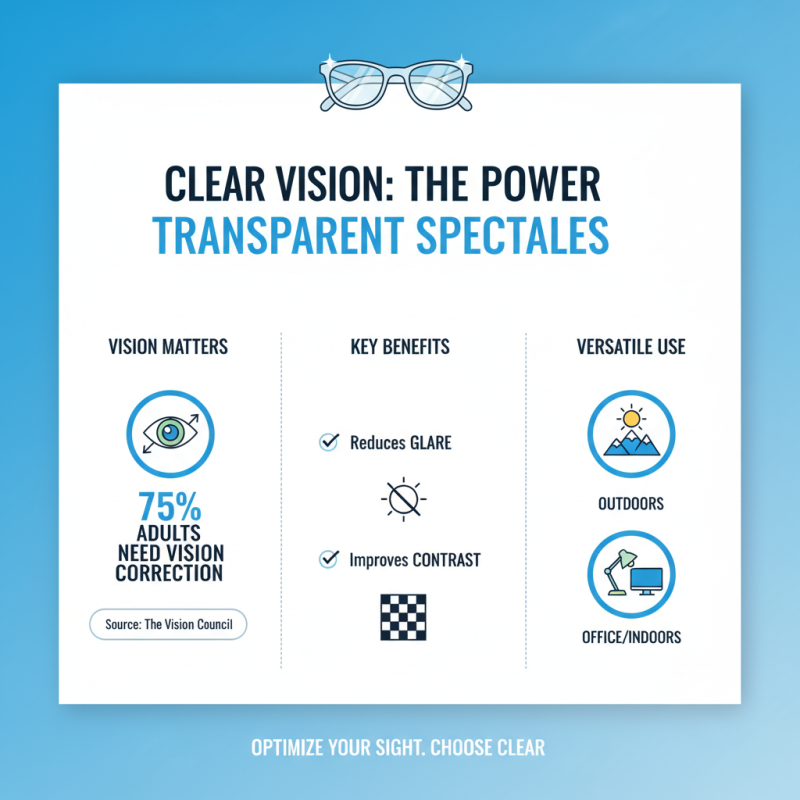
Choosing the right transparent spectacles is crucial for achieving optimal vision. According to a report by the Vision Council, nearly 75% of adults require some form of vision correction. Yet, many overlook the importance of selecting high-quality eyewear. Dr. Emily Hart, an optometry expert, emphasizes, “The right transparent spectacles can transform your visual experience.”
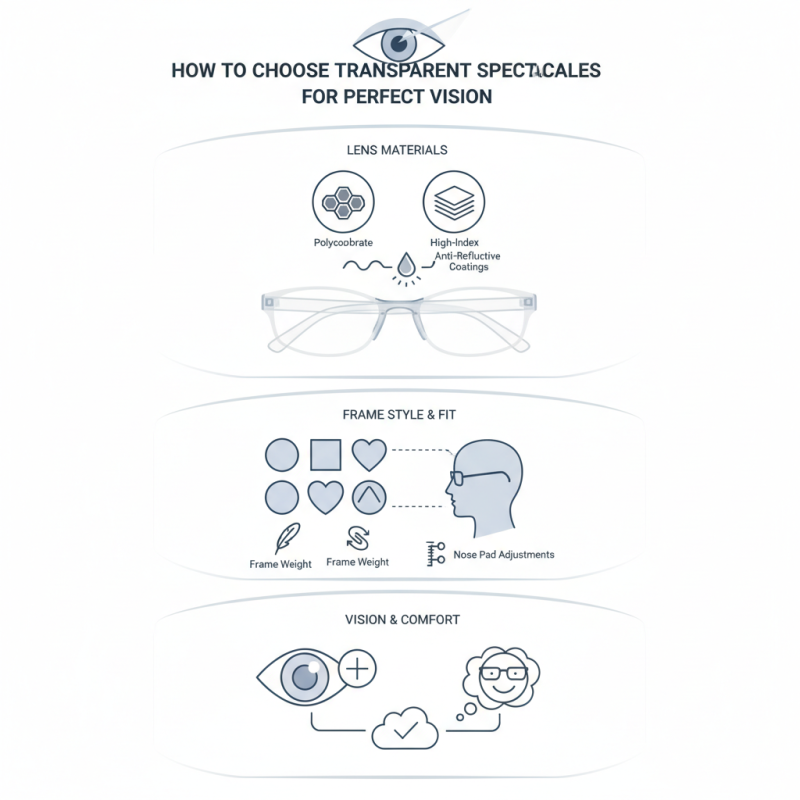
When selecting transparent spectacles, consider factors like lens materials, coatings, and frame styles. Both polycarbonate and high-index lenses offer excellent clarity and impact resistance. Anti-reflective coatings can reduce glare, enhancing your visual comfort, especially in bright environments.
Moreover, many consumers face challenges while choosing frames that complement their face shapes. It's not just about style but also about fit and comfort. A poorly fitting spectacle can cause discomfort and visual strain, leading to a less satisfactory experience. Small details, like frame weight and nose pad adjustments, can significantly affect daily wearability. Choosing transparent spectacles should reflect not just fashion but also a practical understanding of your needs.
Understanding the Importance of Transparent Spectacles for Vision
Transparent spectacles play a crucial role in safeguarding and enhancing vision. According to the Vision Council, nearly 75% of adults require some form of vision correction. Choosing the right spectacles is essential for optimal clarity. Transparent lenses offer unique benefits, such as reducing glare and improving contrast. These features are vital in various environments, from sunny outdoors to dimly lit offices.
Statistics from the American Optometric Association indicate that poor vision affects productivity. Individuals with uncorrected vision face difficulties in daily tasks. This highlights the importance of selecting transparent lenses that meet personal visual needs. Not all lenses provide the same quality. Understanding lens coatings can be confusing but is essential. Anti-reflective coatings can enhance vision significantly. However, some people still prefer uncoated lenses, citing personal comfort.
Experience indicates that transparent spectacles impact not just vision but overall well-being. A well-chosen pair can reduce eye strain and headaches. Still, many individuals overlook basic eye care. Regular eye exams are vital for maintaining vision health. This lack of attention may lead to complications. Investing time in understanding your vision needs can make a substantial difference. It is an area worth reflecting on, as clarity is often taken for granted.
Key Factors to Consider When Selecting Transparent Spectacles
Choosing transparent spectacles is essential for achieving perfect vision. Several key factors can impact your choice. Lens material is among the most critical.
Polycarbonate lenses are lightweight and impact-resistant, making them a popular option. According to the Vision Council, nearly 60% of users prefer polycarbonate for its durability.
However, some users may find them prone to scratches, so a scratch-resistant coating is advisable.
Another vital aspect is the prescription type. Single vision lenses cater to one vision correction need, while progressive lenses offer multiple corrections within one lens.
A study by the American Optometric Association shows that 70% of adults aged 40 and over require multifocal lenses. This highlights the importance of evaluating your specific vision requirements carefully.
Tips: When selecting spectacles, ensure they fit comfortably on your nose and ears. Regularly evaluate your vision needs, as they can change. Always consult an eye care professional for personalized advice.
Transparent lenses can enhance your appearance and provide clear vision, but it's essential to reflect on what works best for you. Consider your lifestyle, as well. If you lead an active life, prioritize durability in your lens choice.
Types of Lenses Available for Transparent Spectacles
Choosing the right lenses for transparent spectacles is crucial for achieving optimal vision. There are several types of lenses available, each offering unique benefits. Prescription lenses are customized to your vision needs, providing clarity and comfort. According to industry reports, over 75% of adults require some form of vision correction. This highlights the importance of selecting the right type of lens.
Another option is polycarbonate lenses. These lenses are lightweight and impact-resistant. They are highly recommended for active lifestyles. Studies show that polycarbonate lenses block 100% of harmful UV rays. However, they can scratch more easily than other materials, requiring careful handling.
High-index lenses are also popular among those with stronger prescriptions. They are thinner and lighter than standard lenses, reducing the weight on the nose. However, they may be more expensive and not suitable for all prescriptions. Consider your daily routine before making a choice.
Tips: Always consult an eye care professional. They can guide you based on your lifestyle and prescription. Regular eye exams are essential, as vision can change over time. Don't overlook lens coatings; anti-reflective and blue light blocking options can enhance comfort and clarity. Remember, experience matters when it comes to lens selection.
Choosing the Right Frame Style for Comfort and Aesthetics
Choosing the right frame style for transparent spectacles plays a crucial role in comfort and aesthetics. Research indicates that 70% of individuals prioritize the frame's comfort when selecting eyewear. A well-fitted frame can significantly enhance the user experience by ensuring stability and minimizing pressure on the nose and ears. Adjustable nose pads and flexible hinges can provide customized fit, catering to various face shapes.
Aesthetically, frame style can amplify personal expression. According to a report from the Optical Retail Survey, 80% of consumers feel that their eyewear reflects their personality. Different shapes—such as aviators or cat-eye frames—can complement facial features. Furthermore, color choices, even in transparent designs, allow for individualization. However, striking the right balance can be challenging. Oversized frames might overshadow facial features, while too narrow designs may look unflattering.
The choice between plastic and metal frames can also influence overall comfort. Plastic can be lighter but may not offer the same durability as metal. It's vital to reflect on how materials impact both the weight and style. Not every stylish frame will suit everyone. Experimentation is often necessary to find the ideal pair that aligns both with comfort and aesthetic desires.
Finding the Best Optician for Personalized Spectacle Fitting
Finding the right optician is crucial for personalized spectacle fitting. You want someone who understands your visual needs. Look for professionals who take the time to conduct thorough eye exams. A good optician will assess not just your prescription, but also how you use your eyes daily.
Experience matters. Ask how long they have been in practice. A knowledgeable optician can provide insights into frame materials and styles. They should also discuss lens options tailored to your lifestyle. Consider their approach to difficult prescriptions. Do they have recommendations for unique challenges?
Communication is key. The best opticians listen to your concerns. Don’t hesitate to express what you need in glasses. Remember, it's your vision. If you feel rushed or ignored, it might not be the right fit. Reflect on your previous experiences to guide your choice. Trust your instincts; they can lead you to a supportive optician who values your sight.