Inquiry
Form loading...

7 Tips for Choosing the Best Zipped Glasses Case

Choosing a Zipped Glasses Case is not just about picking a color that matches your bag. The right case should protect your glasses, open smoothly, and fit the way you travel each day. A zipper that catches or a shell that bends under pressure can quickly become frustrating. Small details matter. Look closely at the frame’s shape, the case’s inner lining, and how much room remains around the lenses. A snug fit is useful, but tight corners may press against delicate frames.

These seven tips will help you compare size, materials, zipper quality, interior softness, and everyday portability. They also encourage you to consider your own habits: Do you carry glasses in a crowded backpack, keep them on a desk, or pack them for weekend trips? A hard outer shell may suit rougher commutes, while a lighter design could be easier to carry. Check that the zipper moves freely and that the lining feels smooth, not scratchy. If possible, test the case with your glasses before relying on it. No design is perfect. And, honestly, it is easy to overlook bulk until the case is already in your bag. These practical checks can make the choice clearer, though personal comfort still counts. A little care now may help prevent avoidable scratches and make daily storage simpler.
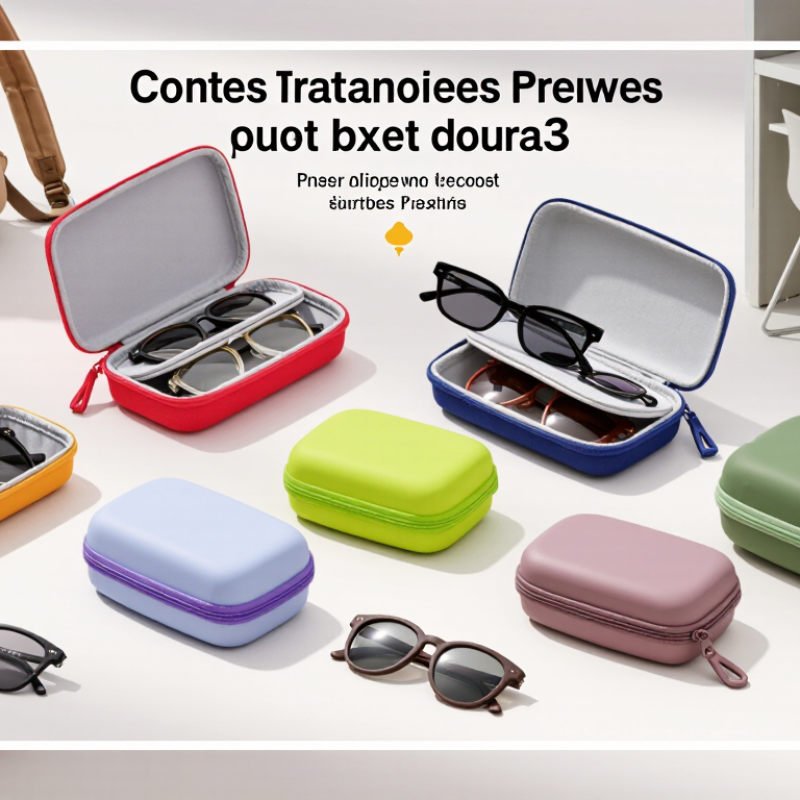
7 Tips for Choosing the Best Zipped Glasses Case

Identify Your Glasses and Protection Needs

Start by identifying the glasses you plan to carry: everyday prescription frames, reading glasses, sunglasses, or a second pair for travel. Their shape and size affect how well they fit inside a zipped case. Measure the widest point of the frames and check their folded length against the case’s interior dimensions. Allow a little room around the hinges; a snug fit can press on them when the zipper closes. Small detail, big difference. Thick temples or oversized lenses may need a roomier case than you expect.

Next, consider the protection your routine calls for. A padded lining can help limit scratches from keys or coins, while a firm outer shell offers more support if the case gets squeezed in a bag. Neither feature makes a case indestructible. I would not assume “hard case” means every pair is safe from pressure; construction and fit still matter. Think about where the glasses spend the day: a desk drawer, a crowded backpack, or a car’s center console. If they are delicate or costly to replace, look for a secure zipper and enough cushioning to keep them from shifting. A slightly larger case may feel less neat, but forcing frames into a tight one is a poor trade.

7 Tips for Choosing the Best Zipped Glasses Case - Identify Your Glasses and Protection Needs

Tip What to Check Why It Matters Practical Guideline
1. Identify your glasses type Note whether you use standard prescription glasses, sunglasses, reading glasses, or larger frames. Frame size and shape affect how easily glasses fit and how well the case closes. Check the frame’s width, height, and folded depth before comparing case dimensions.
2. Match the internal dimensions Compare the case’s usable interior length, width, and depth with your folded glasses. A case that is too tight can press on frames or lenses; an excessively loose fit may let glasses move around. Allow a little clearance so the glasses fit without force and the zipper closes freely.
3. Choose the right shell strength Look for a firm, shape-retaining shell if the case will be carried in a crowded bag or packed with other items. A structured case can help reduce crushing and impact pressure compared with a soft pouch. For light, low-bulk carry, a flexible case may be sufficient; for greater crush protection, choose a rigid or semi-rigid design.
4. Inspect the interior lining Check that the lining is smooth, clean, and free of rough seams or exposed hard edges. A soft interior helps limit rubbing against lenses and frame surfaces during everyday carrying. If your lenses have a special coating, follow the care instructions provided with your glasses and avoid abrasive materials.
5. Test the zipper and closure Look for a zipper that moves smoothly and closes fully without snagging the lining or pressing against the frames. A secure closure helps keep glasses inside and can reduce the chance of dust and loose items entering. Open and close the case several times, and confirm the zipper pull does not catch on the glasses.
6. Consider portability and storage Assess the case’s weight, outer size, and whether it fits your usual pocket, handbag, backpack, or luggage. The best level of protection is only useful if the case is convenient enough to carry consistently. Measure your available storage space and check the case dimensions, including any bulky zipper or protective edges.
7. Check care and moisture claims Review the care instructions and distinguish water-resistant materials from a fully waterproof construction. Moisture protection varies by material, seams, and zipper design; a zipped case should not automatically be assumed waterproof. Choose a surface that can be cleaned as needed, and keep the case dry unless its specifications clearly state otherwise.

Choose a Case Size That Fits Without Pressure

A zipped case should close without squeezing the frames. Measure the glasses at their widest points, including the temples if they fold outward. ISO 8624:2020 defines a measurement system for spectacle frames using millimetres, including lens and bridge measurements. Use the frame’s printed size as a starting point, not as the case’s required dimensions: the case must also accommodate folded temples and frame thickness.

Leave a little clearance around the glasses so they slide in and out easily. A soft lining helps, but it does not make an undersized shell safe. Close the zipper slowly with the glasses inside. If it catches, bows, or presses against a lens, choose a larger case. Too tight? Don’t force it. Also check the hinge area; bulky temples can need more room than the front frame suggests. ISO 12870:2016 covers spectacle-frame requirements and test methods, but it does not set universal case dimensions. That distinction matters.

Fit can be awkward to judge from a product photo. Compare the case’s internal length, width, and depth with your folded glasses, then allow room for a cleaning cloth if you store one there. I’d avoid treating a snug fit as automatically secure; pressure can leave scratches or stress hinges. A slightly roomier case may feel less compact, and that trade-off is easy to underestimate.

Choose a Zipped Glasses Case That Fits Without Pressure

Measure your glasses when folded and compare that length with the case’s usable interior length. Adding about 10 mm is a practical starting point, not a universal standard; check the interior width and depth too, and make sure the zipper closes without pressing on the frames.

Compare Materials and Impact Resistance

A zipped glasses case should protect lenses without becoming awkward to carry. Compare the shell material and padding, not just the case’s appearance. A rigid case made from molded plastic or metal usually resists crushing better than a soft fabric pouch. However, a hard shell can still dent or crack after a sharp drop. Padding helps keep frames from shifting, but thick padding cannot fix a weak shell.

Tip: Press gently on the closed case. If the sides flex easily, it may offer limited protection under pressure. Check the zipper, too. It should move smoothly and close fully around the edge. A stiff zipper or exposed gap can make the case less practical, even when its shell feels sturdy.

Soft cases are lighter and easier to tuck into a pocket, but they mainly guard against scratches and minor bumps. Hard cases add bulk, yet they’re a sensible choice in a crowded bag with keys or a water bottle. Look for a soft lining that feels even, with no rough seams near the lenses. Protection claims can be easy to overread; a case’s material alone doesn’t prove how it will handle every impact. Fit matters as well. Frames rattling inside may hit the shell, while an overly tight case can press on the hinges.

Assess Zipper Quality and Everyday Portability

A zipped glasses case should protect lenses without becoming a nuisance in daily use. The Vision Council’s 2023 consumer research reported that about 76% of U.S. adults use some form of vision correction. For many people, that means handling glasses throughout the day, so a zipper that opens smoothly matters. A high-quality case should close fully without forcing the slider or catching its lining.

Tip 1: Open and close the zipper several times in the shop. Check for snagging, uneven teeth, and a slider that feels loose. ASTM International’s D2061 standard describes methods for testing zipper strength; it is a useful reference, but a quick hand check is not a laboratory test. A firm pull proves little. Also inspect the zipper ends, where gaps can let dust enter.

Tip 2: Test portability with the case in your usual bag or coat pocket. It should sit flat, stay closed, and remain easy to retrieve. A sturdy case can still feel awkward.

Tip 3: Look for a zipper pull that is easy to grip with cold or damp fingers, but not so large that it catches on fabric. Small details matter. I would still check the fit with your own glasses; case dimensions alone can be misleading.

Consider Durability, Care, and Overall Value

7 Tips for Choosing the Best Zipped Glasses Case

Durability shows up in small details: zipper teeth that track smoothly, reinforced seams, and a firm shell that resists pressure in a crowded bag. Press gently on the case; it should flex slightly, not collapse onto the lenses. Check that the lining feels soft and has no loose threads. A zipper can look sturdy and still snag. Try it several times before buying.

Care affects long-term value. Choose a lining that can be wiped clean, and let the case dry fully if it gets damp. Keep grit away from the interior; tiny particles can scratch lenses when glasses slide in and out. The U.S. EPA’s 2018 Advancing Sustainable Materials Management report estimated that Americans generated 292.4 million tons of municipal solid waste that year. That figure does not measure eyewear cases, but it is a useful reminder to keep durable items in service. It is easy to overvalue a low price and overlook a weak hinge or hard-to-clean lining. Compare expected use, repairability, and protection—not just the tag. A slightly bulky case may be inconvenient, too. The right choice depends on where it travels.