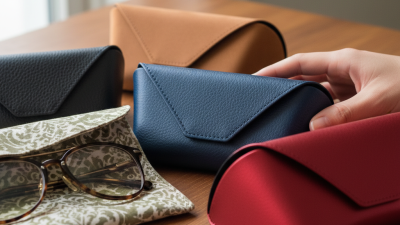
7 Tips for Choosing the Best Large Spectacle Case
Choosing a Large Spectacle Case is not a minor accessory decision. It can protect expensive lenses, delicate frames, and your daily routine.
The Vision Council’s 2024 Consumer Insights research reports that roughly three-quarters of American adults use some form of vision correction. That makes reliable eyewear storage a practical household need, not a fashion extra. Grand View Research also identifies eyewear as a growing global consumer market, where product protection supports longer use and replacement planning. However, case-specific statistics remain limited. That gap deserves honest attention.
Optical expert Dr. Gary Heiting, OD, advises, “Always store your glasses in a case when you’re not wearing them.” His guidance highlights a simple habit with real value. A suitable Large Spectacle Case should fit oversized frames without crushing the bridge or pressing against the lenses. It should also offer firm hinges, smooth lining, useful ventilation, and enough depth for sunglasses with thicker arms.
Small details matter.
A case that looks attractive may still fail inside a crowded handbag. A hard shell may protect better, yet occupy more space. Soft fabric can feel convenient, but it may not resist pressure or dust. There is no perfect choice for everyone. I have found that measuring the frame first prevents many disappointing purchases, although even careful measurements cannot predict every fit problem.
These seven tips examine size, structure, materials, closure quality, portability, cleaning, and everyday durability. They are designed for practical comparison, informed by consumer research and optical-care experience. The right case will not eliminate every risk. It can reduce avoidable damage.
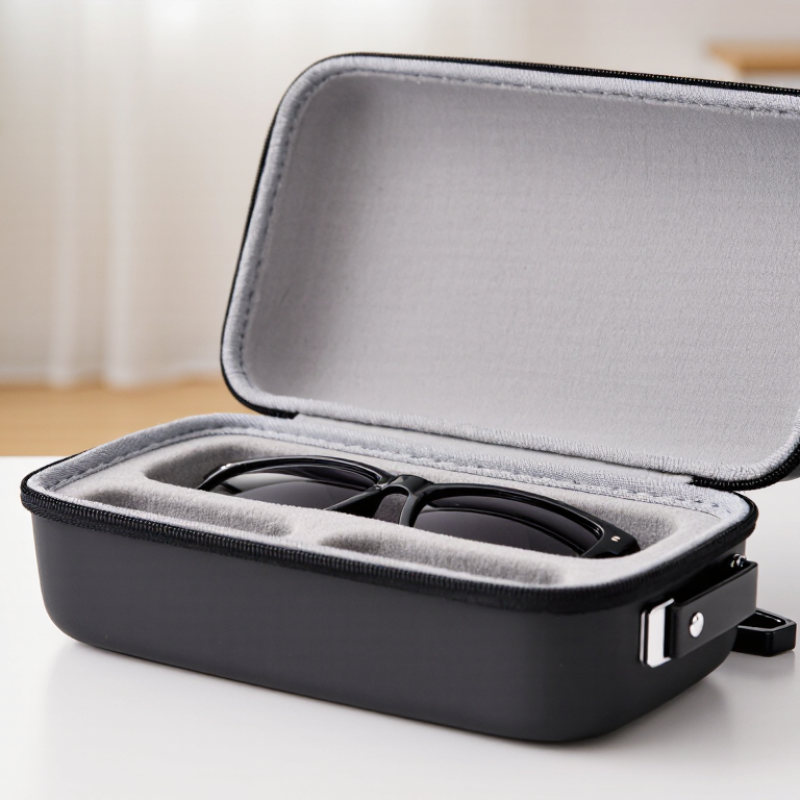
Measure Frame Length, Bridge Width, and Temple Clearance Before Buying
Choosing a large spectacle case starts with accurate measurements, not guesswork. A case may look spacious but still press against curved temples. Measure your glasses while they are open and flat. Record frame length, bridge width, and temple length in millimeters. Add a small allowance for protective space.
Tip: Measure the frame length from the outer edge of one lens to the other. Include the frame rims, but not the extended temples. Then measure the bridge, the section resting over your nose. A wider bridge often needs extra internal room. Leave at least 5 millimeters around the frame when possible. Too little space can scratch lenses or bend hinges.
Tip: Check temple clearance carefully. Fold the arms naturally, without forcing them inward. Measure the full folded width and the highest point of the frame. Some oversized frames have thick hinges or raised nose pads. These details need extra height. I once chose a case by lens width alone, and the temples pushed against the zipper. That mistake was avoidable.
Look for a firm shell, soft lining, and smooth edges around the opening. The case should close without pressure. Test it with your actual glasses, especially if they have decorative hinges or adjustable nose pads. A loose case allows movement, while an overly tight case creates stress. Measurements are helpful, but real fit remains the most reliable check. unerquicklich
7 Tips for Choosing the Best Large Spectacle Case
Measure your frame length, bridge width, and temple clearance before buying. The chart shows realistic eyewear measurements and the recommended minimum internal case dimensions, including approximately 5 mm of extra length, 4 mm of extra width, and 10 mm of extra height for easier storage.
Tip: Choose a case whose internal dimensions are equal to or larger than your measured frame dimensions. A rigid case is preferable for larger frames and thicker temples.
Prioritize Impact Protection Using ANSI Z80.3 and ISO 12312-1 Benchmarks
7 Tips for Choosing the Best Large Spectacle Case
A large spectacle case should protect oversized frames without crushing their lenses or bending the temples. Look for a rigid outer shell, reinforced edges, and an interior that holds glasses away from the lid. A soft lining helps reduce scratches, while a broad opening makes daily use easier. Small details matter.
ANSI Z80.3 and ISO 12312-1 are useful reference points, but they primarily address eyewear, not storage cases. ANSI Z80.3 can help confirm impact-related and optical expectations for nonprescription eyewear. ISO 12312-1 covers sunglasses and sunglare protectors for general use. These standards do not automatically prove that a case can survive a drop. Ask for clear test information about the case itself, including impact, compression, and hinge durability.
Measure the glasses before buying. Include side shields, thick temples, nose bridges, and protective clips. A case that fits only the lenses may force the frame against the shell. That mistake is easy to make. I once chose a case with excellent padding but insufficient depth; the zipper pressed against the frame. Check the internal length, width, and height, then allow a few millimeters of clearance. Choose secure closure hardware, moisture-resistant lining, and a structure that stays closed inside a bag. Standards improve judgment, but practical fit still decides whether protection works.
Compare EVA, ABS, and Polycarbonate by Weight, Rigidity, and Durability
7 Tips for Choosing the Best Large Spectacle Case
Material choice changes the case’s weight, stiffness, and service life. Typical MatWeb material data lists EVA foam near 0.94 g/cm³, ABS around 1.04 g/cm³, and polycarbonate near 1.20 g/cm³. These figures are only starting points. Wall thickness, hinges, lining, and reinforcement can change the final weight considerably.
EVA foam
0.94 g/cm³
ABS
1.04 g/cm³
Polycarbonate
1.20 g/cm³
EVA feels light and forgiving. Its soft structure cushions frames and tolerates small drops, but it can compress under heavy storage. ABS offers a firmer shell, cleaner edges, and good dimensional stability. It suits cases that must resist bending during daily transport. Polycarbonate provides the highest rigidity and strong impact resistance in many engineering applications. However, it usually adds weight and cost.
Reports and testing guidance from UL Prospector and ASTM material standards show why grade selection matters; “polycarbonate” alone does not guarantee equal performance.
Check more than the plastic label. Ask for density, wall thickness, hinge-cycle results, and impact-test conditions. ASTM D256 can help compare notched Izod impact behavior, while ASTM D4169 supports package-shipping evaluations.
A large case with thin ABS may fail sooner than a thicker EVA design. I have also seen stiff shells protect poorly when their hinges loosen. That detail is easy to miss.
Choose EVA for portability, ABS for balanced rigidity, or polycarbonate for demanding handling. Yet the best answer depends on the frame size, loading pattern, and expected abuse.
Match Capacity, Cleaning Needs, and 2.2-Billion-User Vision-Care Demands
7 Tips for Choosing the Best Large Spectacle Case
The World Health Organization’s World Report on Vision estimates that at least 2.2 billion people live with vision impairment. At least 1 billion cases could have been prevented or remain unaddressed. That scale makes everyday protection important, not decorative.
Choose capacity first.A large case should hold two frames, cleaning cloths, and spare nose pads without pressure. Measure your widest frame, including sidearms. Leave roughly 10 millimeters of extra internal width. Check the depth, too. Oversized sunglasses can distort a tight lid.
I once chose a roomy case that crushed the glasses at the hinge. Bigger is not always safer.
Inspect the shell, hinge, lining, closure, weight, and cleaning access. These are seven practical checks. A rigid shell resists bag compression. Soft lining reduces scratches. A firm hinge should open smoothly, without loose movement. The closure must stay shut during travel.
Washable fabric helps when fingerprints, dust, or sunscreen build up. Avoid complicated seams that trap debris. The Lancet Global Health Commission on Global Eye Health highlights uncorrected refractive error as a major source of avoidable vision loss.
A clean, usable case supports consistent eyewear care, although it cannot replace professional eye examinations. Consider weight carefully. An excessively heavy case may stay at home. That defeats its purpose. Choose practical capacity over impressive size.